COP27 Sharm El-Sheikh
“We aim to develop programs to protect marine wealth and projects funded by financing agencies, in addition to explaining the danger of increasing acidity that affects coral reefs, in addition to how to limit the rise in sea levels that threaten coastal cities,” Hamouda added.
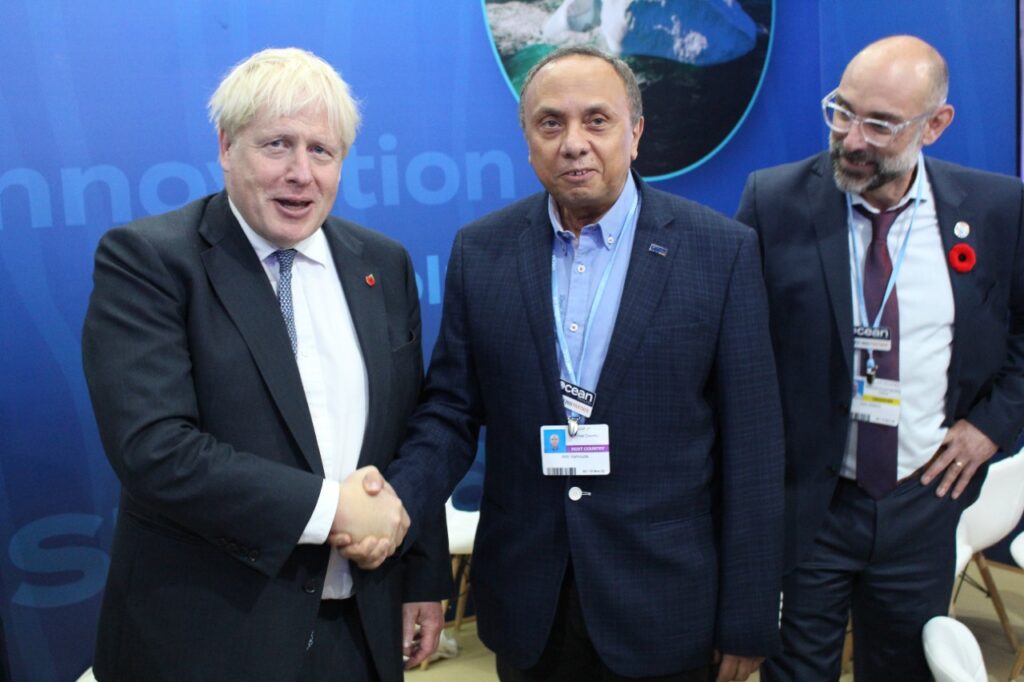
Boris Johnson visits the oceans pavilion at the Climate Summit and supports Egypt’s measures to confront climate change
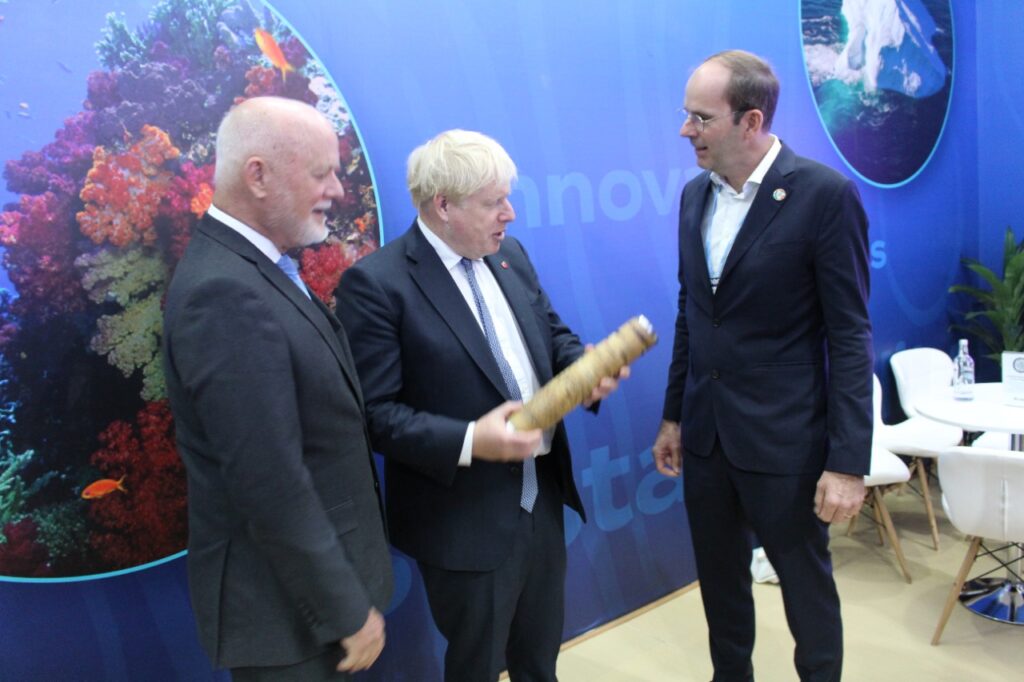
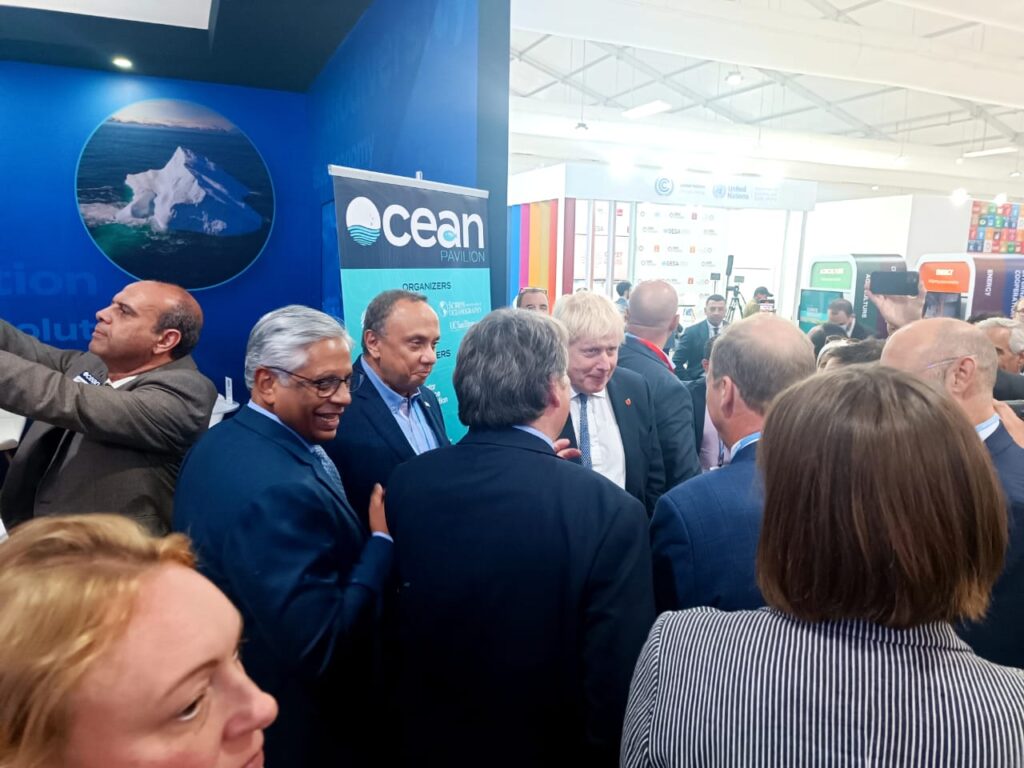
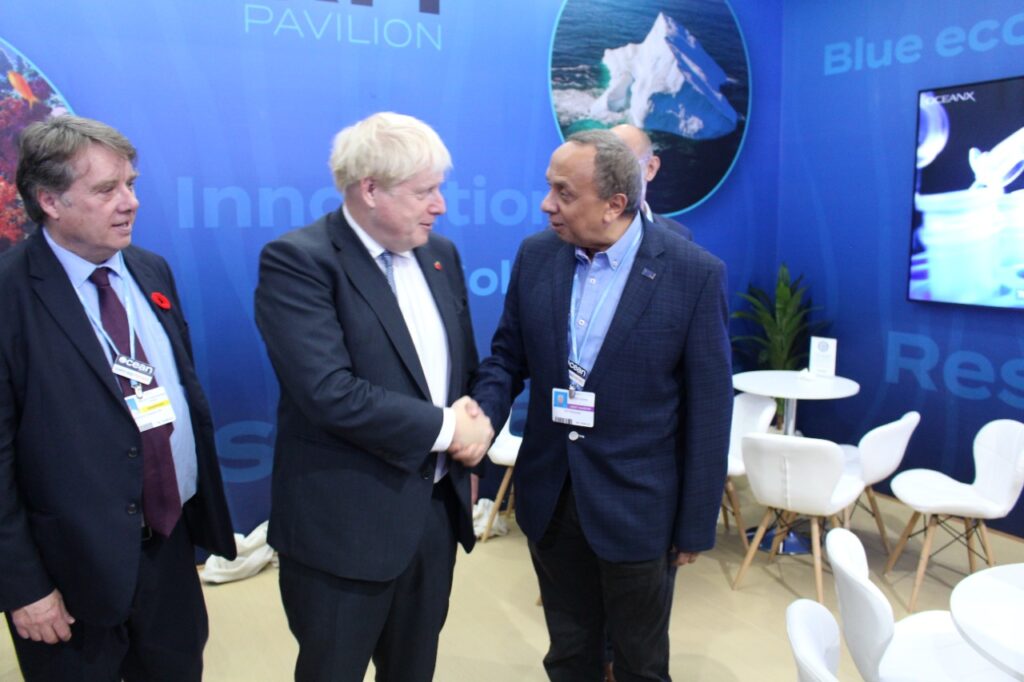
Boris Johnson, the former British Prime Minister and currently participating in the COP27 climate conference, visited the oceans pavilion at the conference and declared his support for all measures taken by the Egyptian government represented by the Institute of Oceanography and Fisheries to protect the seas and oceans from climate changes.
Johnson expressed his happiness at organizing a pavilion for ocean sciences for the first time at the COP27 climate conference, which he described as an important step for sharing scientific expertise, discussing studies and scenarios, and developing programs and radical solutions to reduce the effects of climate change and protect coral reefs.
And prof. Dr. Amr Zakaria, President of the National Institute of Oceanography and Fisheries: The allocation of a pavilion for the oceans under the management of the United Nations at the current climate conference in Sharm El-Sheikh is the first of its kind and this did not happen in the history of previous climate conferences.
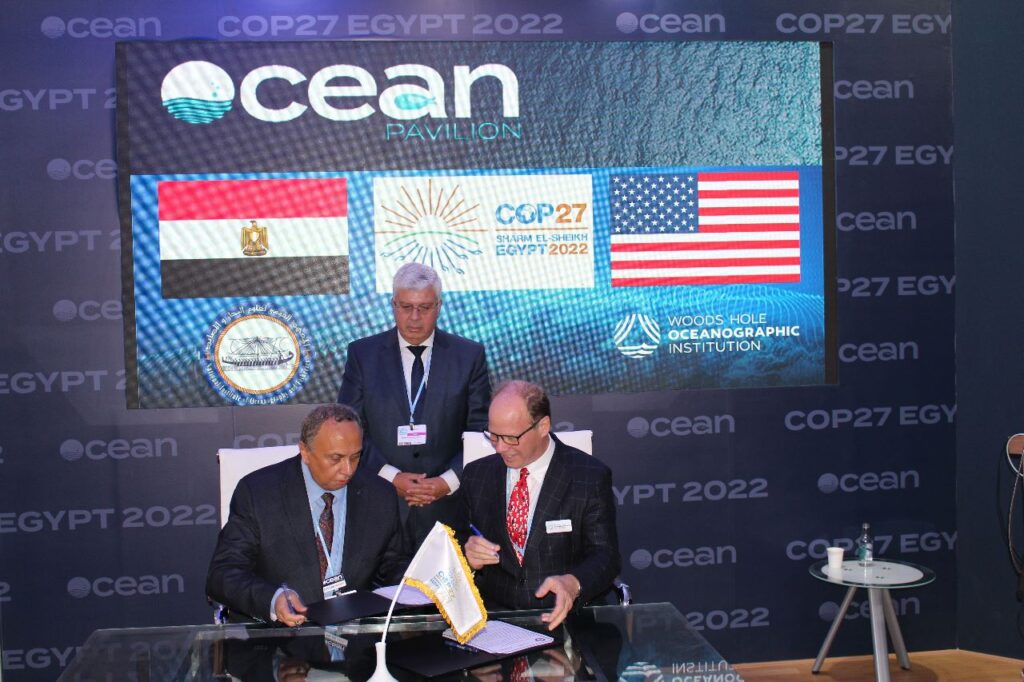
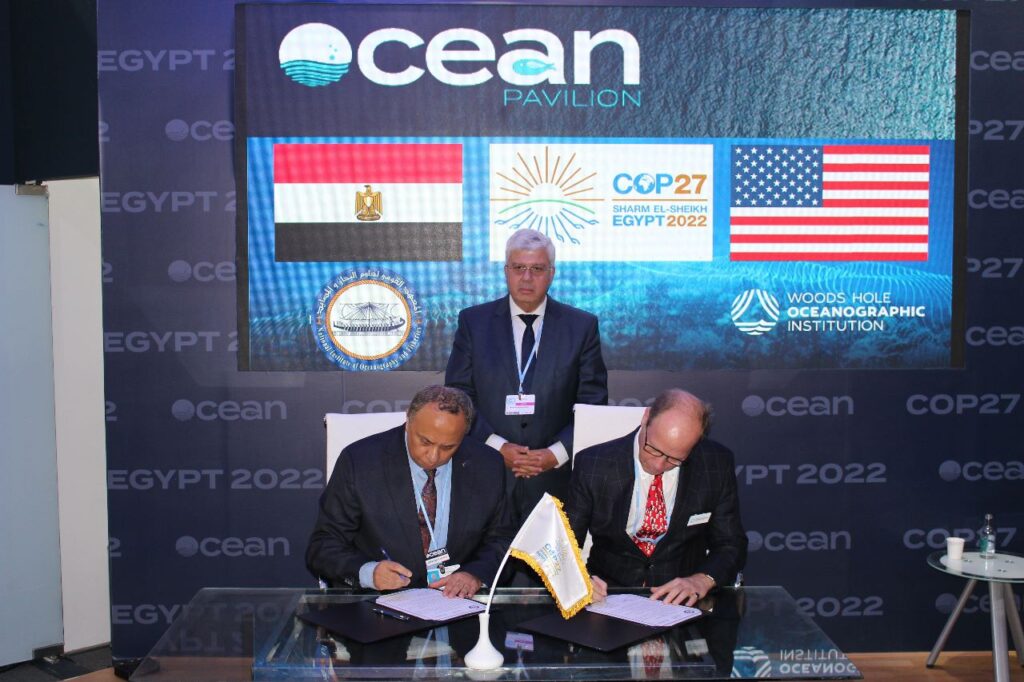
This comes within the activities and events of the National Institute of Marine Sciences, headed by Dr. Amr Zakaria Hammouda, in the blue region at the COP27 Conference of the Parties to the United Nations Framework Convention on Climate Change, which is currently being held in Sharm El-Sheikh.
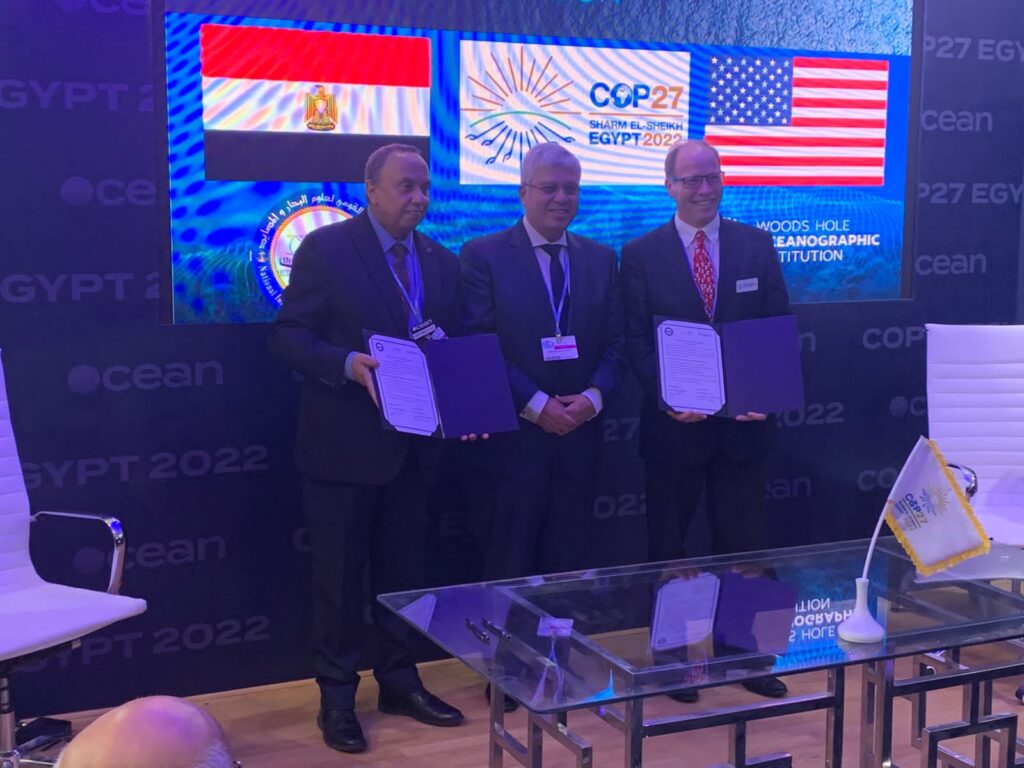
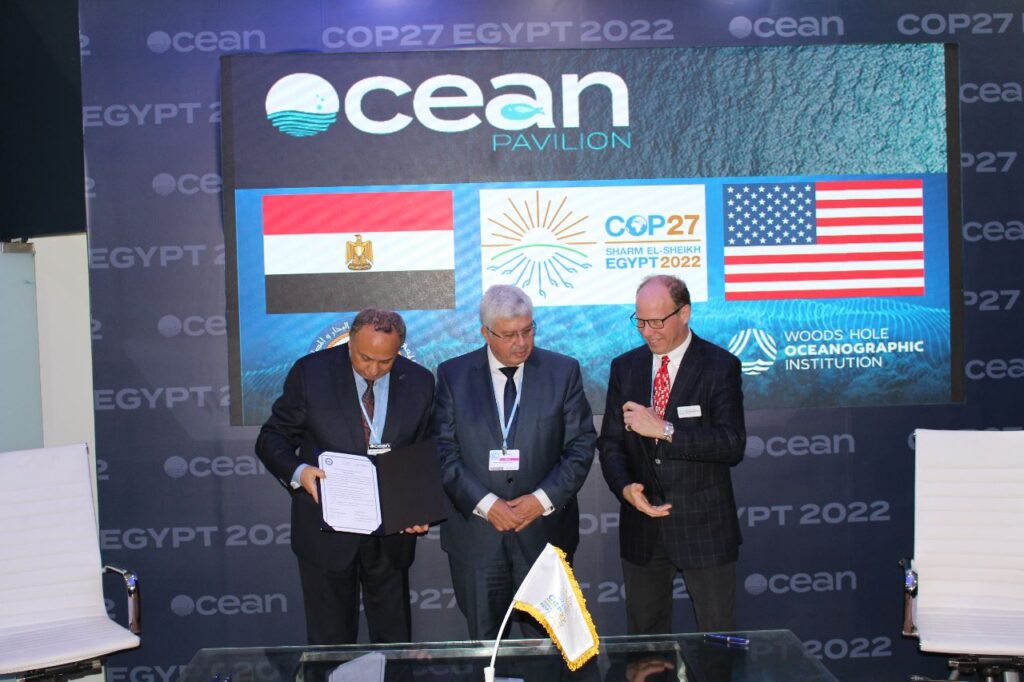
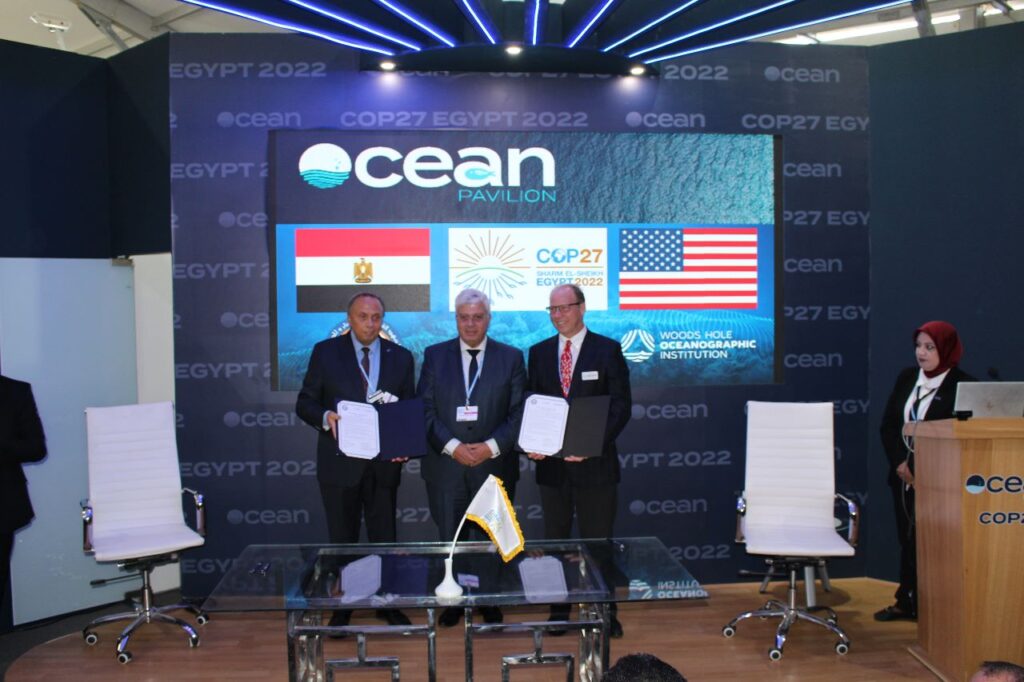
The cooperation protocols aim to enhance and support joint scientific cooperation in the field of marine sciences, develop programs to reduce climate change, protect all marine organisms, preserve coral reefs and the living resources of the seas, as well as assist Egyptian researchers in working on advanced research ships in for Woods Hole as they carry out scientific research in the high seas and oceans.
The allocation of a pavilion for the oceans under the management of the United Nations at the current climate conference in Sharm El-Sheikh is the first of its kind and this did not happen in the history of previous climate conferences.
Dr. Ayman Ashour, Minister of Higher Education and Scientific Research, witnessed the signing of a protocol for cooperation between the National Institute of Oceanography and Fisheries and the Woods Hole Institute in the United States, which is the first institution in the field of science seas and marine explorations.
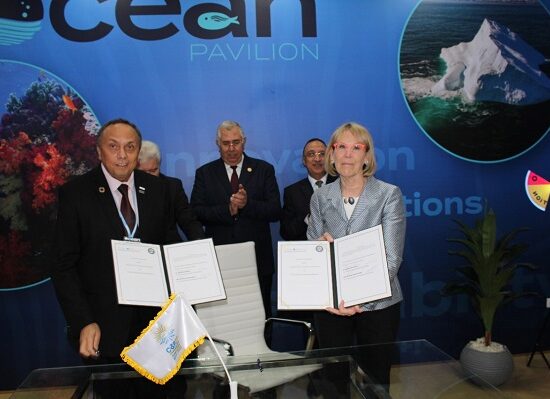
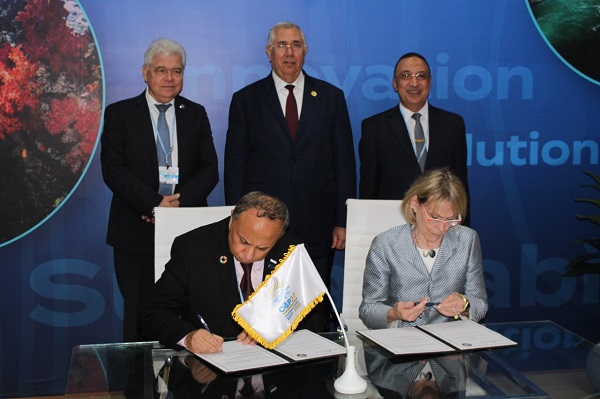
The minister also witnessed the signing of a cooperation protocol between the institute and the National Center for Oceanography in England, headed by Dr. Peter Eide, head of the center.
whether fisheries pools or mineral wealth and sunken antiquities, on the sidelines of the climate summit currently held in Sharm El-Sheikh.
The minister also witnessed the signing of a cooperation protocol between the institute and the National Center for Oceanography in England, headed by Dr. Peter Eide, head of the center.
The national Institute of Oceanography and Fisheries” cooperates with the American Scripps Institute to transfer research technology for sunken antiquities
The National Institute of Oceanography and Fisheries headed by Dr. Amr Zakaria Hammouda signed a memorandum of understanding with the Scripps Institute, the largest and most prestigious American institute, which was established in 1903.
The signing was attended by Mr. El-Koseir, Minister of Agriculture, Major General Mohamed Sherif, Governor of Alexandria, and UNESCO Secretary-General for Marine Sciences.
The memorandum of understanding included the transfer of modern technology in the field of research and exploration of all natural resources in the seas,
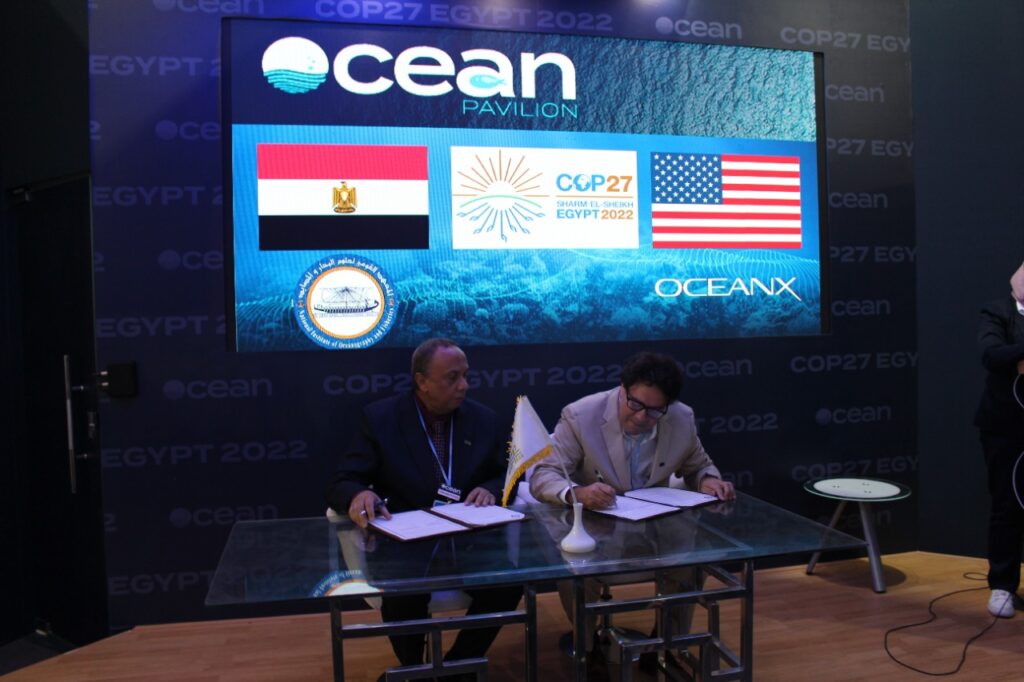
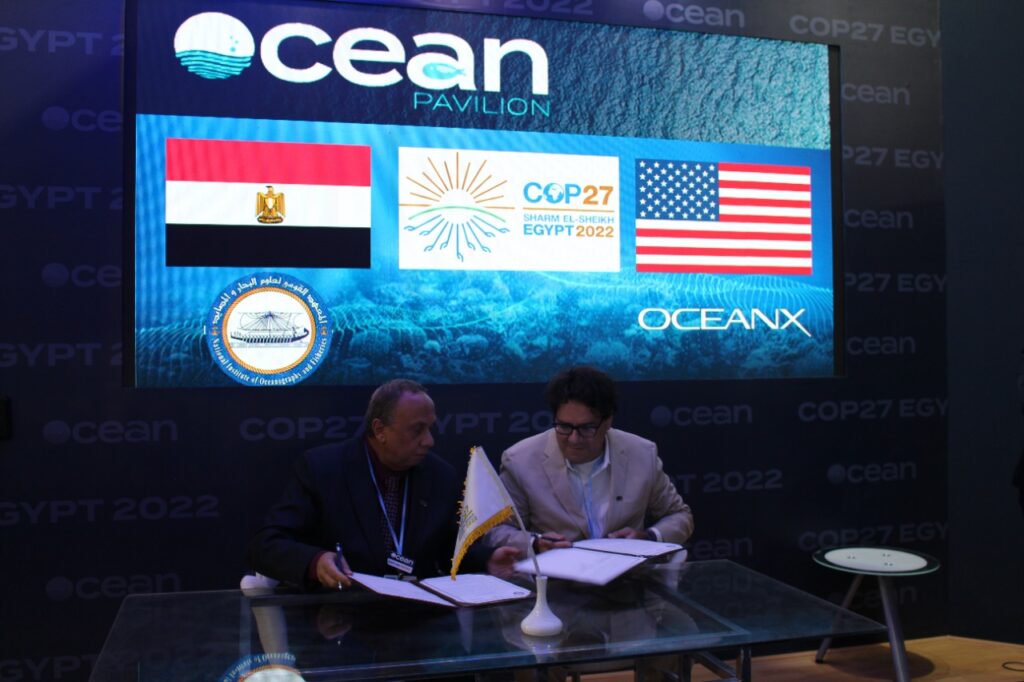
the institute with its research ships (Salsabil and Yarmouk) and documenting them in Photographing the Egyptian coasts and beaches and making documentaries about them, which will contribute to studying the nature of marine organisms and developing programs to reduce climate change, protect all marine organisms, preserve coral reefs and the living resources of the seas.
The National Institute of Oceanography and Fisheries signs a memorandum of understanding with the Ocean X Institute for Documentary Filming
The National Institute of Oceanography and Fisheries, headed by Prof. Amr Zakaria Hamouda, signed a memorandum of understanding with the Ocean X Institute, which is responsible for making documentary films for marine sciences for the benefit of “National Geographic” on the sidelines of the Climate Summit currently being held in Sharm El-Sheikh.
Prof. Amr Zakaria said that this memorandum comes in the institute’s desire to transfer and get benefit from the technology of advanced research institutes in the field of recording “National Geographic” documentaries by training scientific research Staff on how to document research trips carried out by
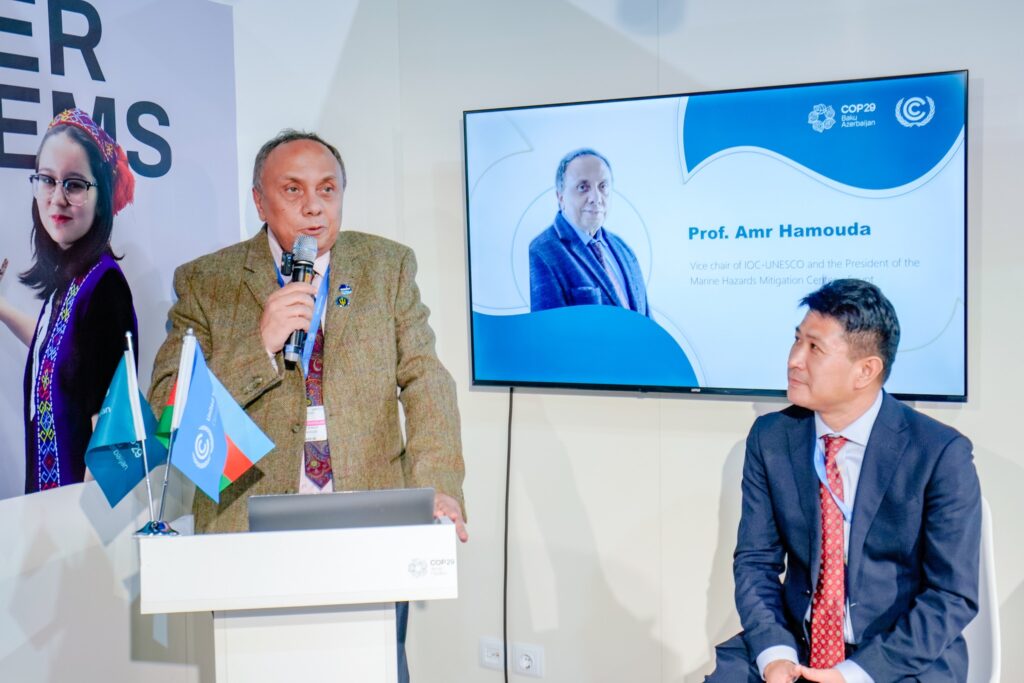

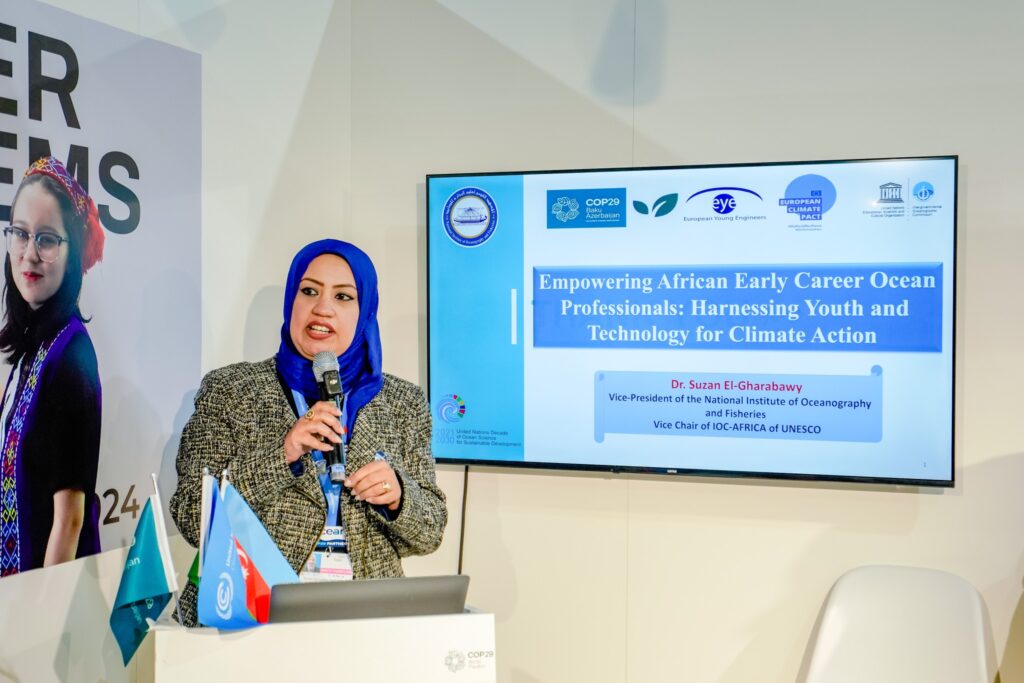
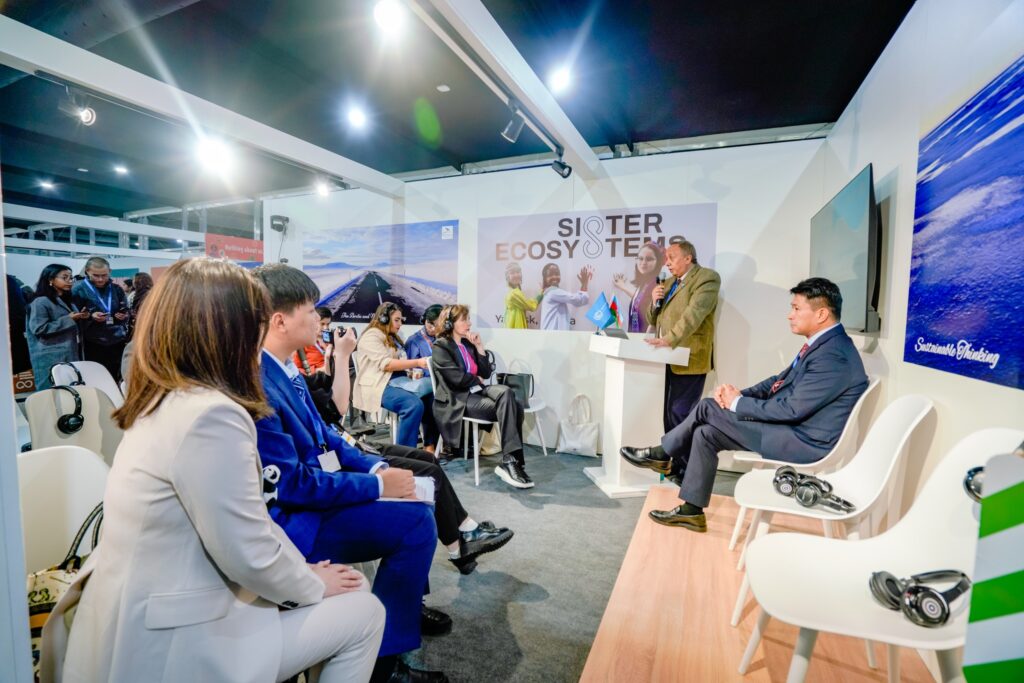
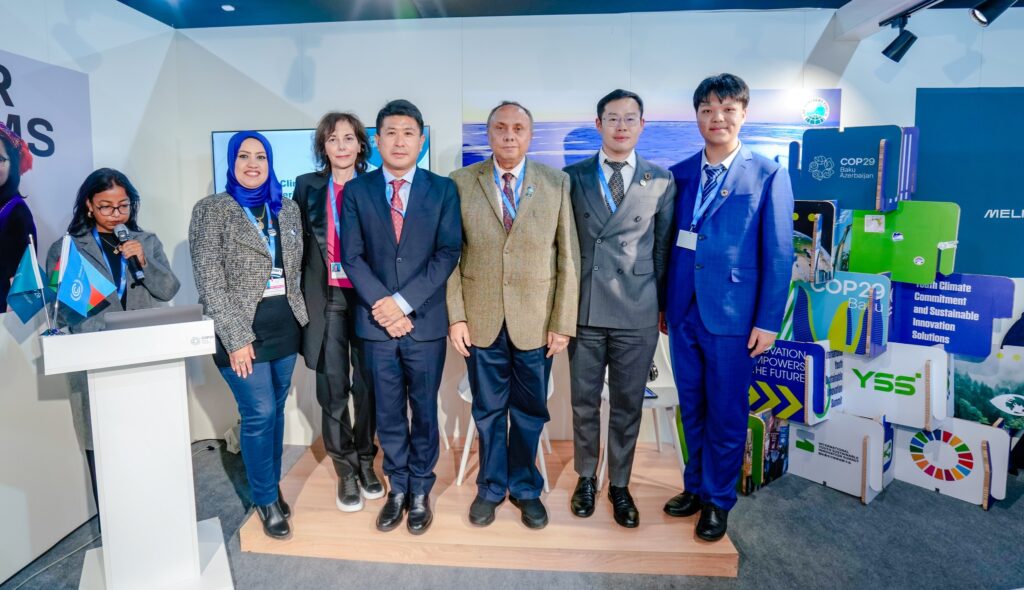
Empowering Youth, Promoting Equality, and Driving Innovation.
Honoring Successful youth leaders.
The event seeks to advance impactful climate solutions by uniting youth leaders, gender equality advocates, and innovation experts. Through keynote speeches, panel discussions, and collaborative dialogue, the summit will highlight the essential role of young voices, equitable representation, and technological progress in driving climate resilience. This gathering aims to inspire practical commitments and forge partnerships that contribute to a sustainable.
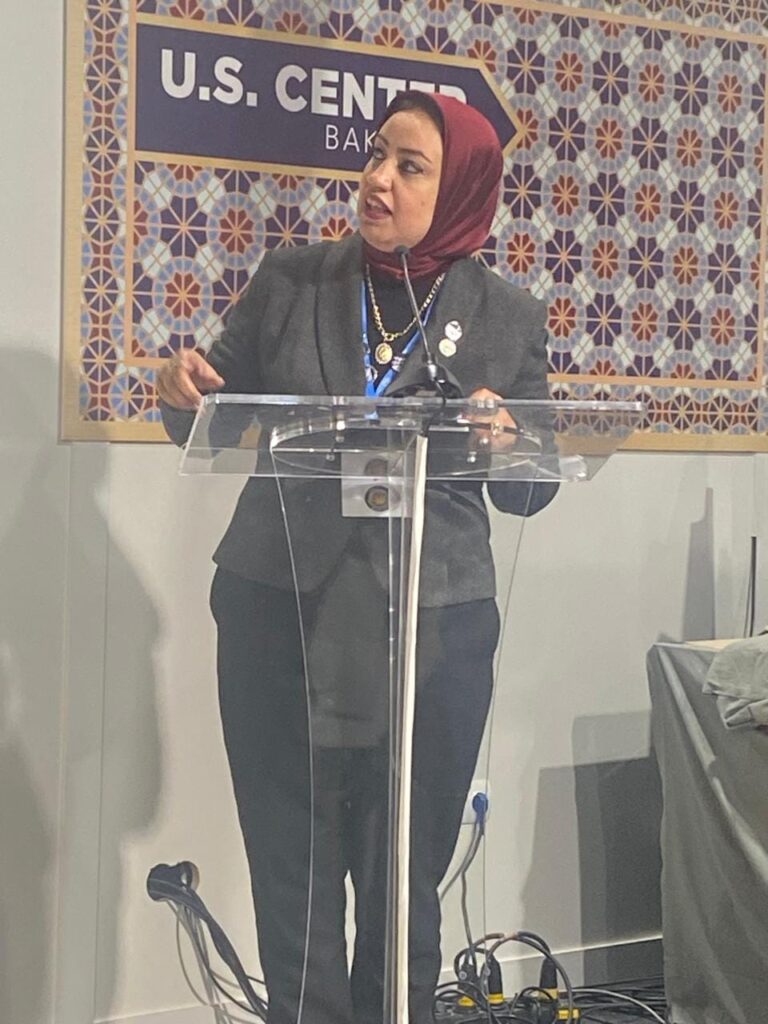
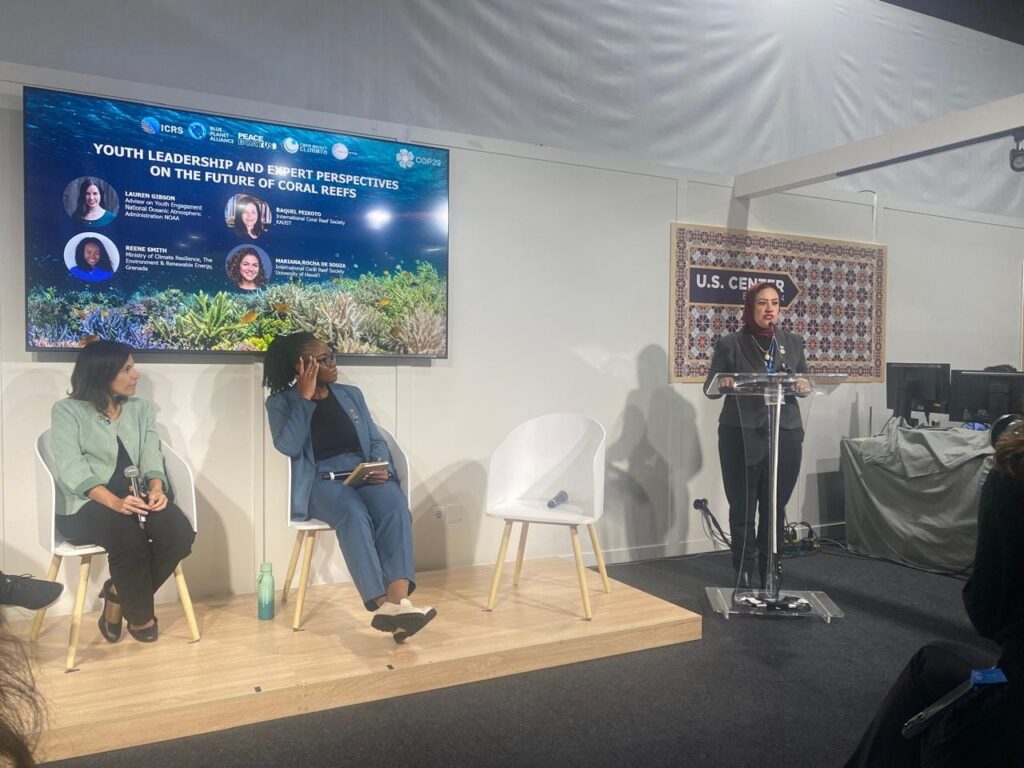
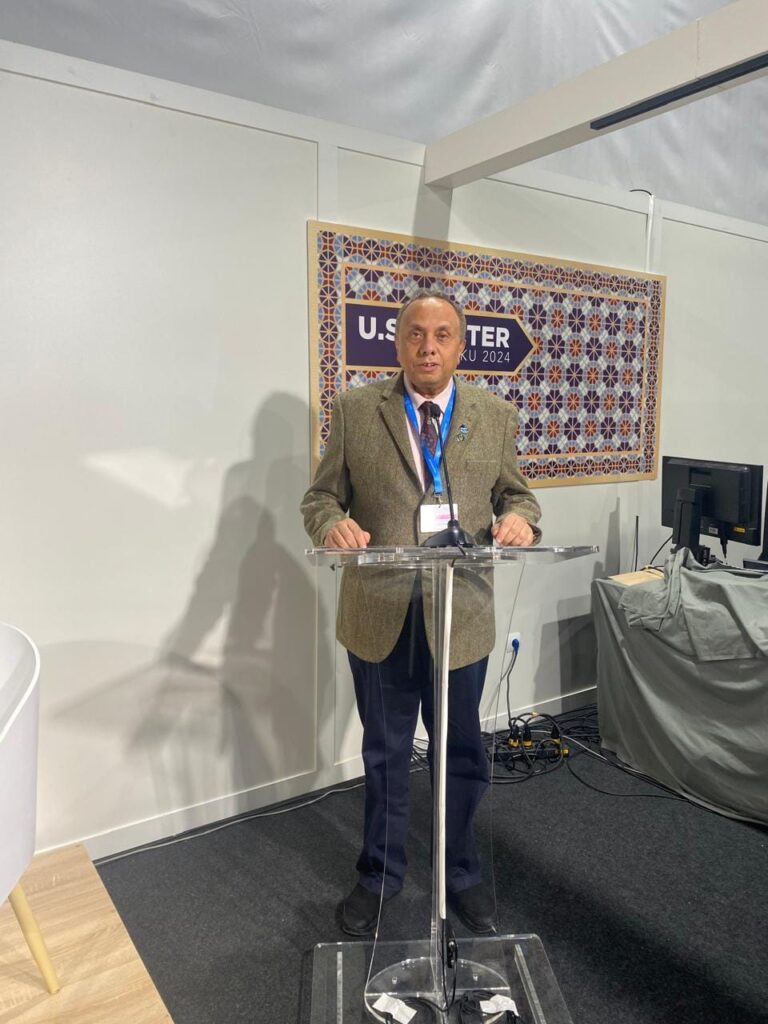
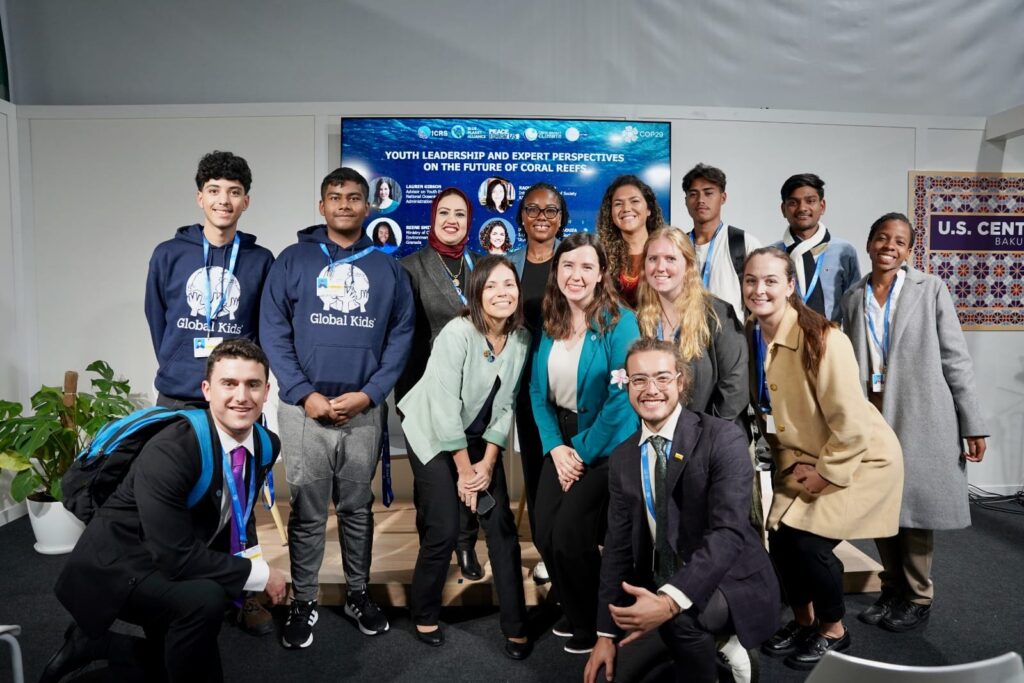

Youth Leadership and Expert Representatives on the Future of Coral Reefs.
This session brings together emerging youth leaders and seasoned experts to discuss the critical state of coral reefs and the urgent need for innovative solutions. Participants will explore the intersection of youth activism, scientific research, and policy-making, highlighting how young voices can drive meaningful change in marine conservation. Experts will provide insights into the current threats facing coral ecosystems, including climate change, pollution, and overfishing, while youth leaders will share grassroots initiatives.